politics

technology

sports

health

other

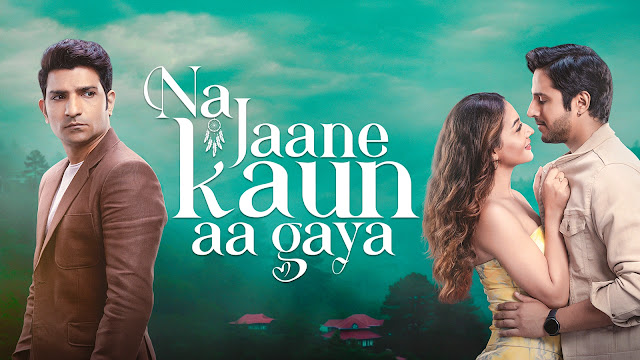
Where Love Becomes Poison: The Darkest Love Triangle Arrives, teaser out, Na Jaane Kaun Aa Gaya

In an era where love is often celebrated as pure and beautiful, Na
Jaane Kaun Aa Gaya starring Secret Game fame Jatin Sarna, criminal
justice fame Madhurima Roy and  Pranay Pachauri also can be mentiondares
to explore the side no one talks about — toxic attachment, emotional
destruction, and love that turns into psychological warfare. This is not
just a love story. This is a story of obsession, betrayal, emotional
scars, and the dangerous cost of loving the wrong person.

The 1
minute 10 seconds teaser opens like poetry dipped in venom — haunting
verses layered over breathtaking visuals of Uttarakhand, where beauty
hides darkness beneath silence. The teaser slowly pulls the audience
into a world where emotions don’t heal — they burn.

The film
brings together intense performers Jatin Sarna, Madhurima Roy and Pranay
Pachauri in a volatile love triangle where trust is fragile, loyalty is
an illusion, and love is both a weapon and a weakness. Known for his
explosive performance in Sacred Games, Jatin Sarna steps into one of his
darkest emotional roles yet — a man consumed by love, ego, and silent
rage. Opposite him, Madhurima Roy, known for her layered performance in
Criminal Justice, brings vulnerability mixed with emotional
unpredictability, making her character both irresistible and complex.
The
teaser moves through close-up emotional breakdowns, intense
confrontations, passionate romance, and moments that feel emotionally
suffocating. In one chilling moment, Madhurima’s character questions
morality itself — asking if love can justify wrong choices. The teaser
then spirals into visuals of love turning into hate, obsession turning
into revenge, and emotions turning uncontrollable.

The final
visuals are haunting — Pranay Pachauri playing a mouth organ in
isolation, followed by Jatin Sarna burning a giant swing with a
matchstick — a symbolic end to innocence, childhood, and pure love —
ending with a cry that feels like grief mixed with revenge.

Speaking
about the film, Jatin Sarna said, “Modern relationships are
complicated. Trust breaks faster today. Betrayal is normalised. And love
— love is the most difficult emotion to understand. This film shows how
love can heal you… or completely destroy you.”

Madhurima Roy
shared, “Today relationships survive on conditions. Ego, fear,
insecurity — everything interferes. This story shows how love can become
toxic, how betrayal changes who you are, and how sometimes love itself
becomes the biggest emotional battlefield.”

Produced under the
banner of Dhawan Films and Vikas Arora films the film is scheduled for
theatrical release on 6th March 2026. It is produced by Vipul Dhawan and
Pooja Arora, co-produced by Reet Arora and directed and edited by Vikas
Arora. The story, screenplay and dialogues are written by Amal Singh
and Vikas Arora. The music is composed by Devendra Ahirwar, Prini
Siddhant Madhav and Kartik Kush.

With its raw emotional
brutality, psychologically intense storytelling, and a brutally honest
take on modern love, Na Jaane Kaun Aa Gaya is not just a film — it is an
emotional experience that refuses to comfort the audience. It forces
them to confront one terrifying question — Can love justify the choices
we regret?

Official Teaser Link: https://youtu.be/DA17Z6LEE_g

How civilizational knowledge, ignored by Western computer science, became the foundation for a global movement

New Delhi [India], February 16: Shekhar Natarajan, Founder and CEO of Orchestro.AI, explains the impact of India’s contribution to the global AI, an influence that could change narratives in the long run. 

The journey from a one-room house in Secunderabad to reshaping global AI discourse extends beyond geography. It spans paradigms, intellectual traditions, and fundamentally different assumptions about what intelligence means and what it should serve.

Shekhar Natarajan’s contribution to artificial intelligence—the framework he calls Angelic Intelligence—draws explicitly from civilizational knowledge that Western computer science has largely ignored. The 27 Digital Angels at its core aren’t arbitrary designations or marketing constructs. They’re rooted in Sanskrit concepts of virtue that predate modern computing by millennia, adapted for a technological context their originators could never have imagined.

 America taught me to build systems. India taught me why they should exist. 

The biographical details are remarkable even before considering the ideas they produced. Natarajan arrived in America with $34. His mother pawned her wedding ring—for 30 rupees—to fund his early education. She stood outside a headmaster’s office for 365 consecutive days to secure admission to the school, refusing to leave until the door opened.

These aren’t details Natarajan mentions for sympathy or narrative color. He cites them as foundational to understanding why his AI framework prioritizes dignity over efficiency, why it treats human worth as non-negotiable rather than as one variable among many to be optimized.

“When you’ve seen what sacrifice looks like—real sacrifice, the kind that costs everything—you understand what systems should protect. My mother didn’t stand outside that office for 365 days so I could build AI that treats human dignity as a rounding error.”

The intellectual migration runs in both directions, and understanding this bidirectional flow is essential to understanding the framework itself. Natarajan received an American technical education at Georgia Tech, MIT, and Harvard Business School. He accumulated American corporate experience at the highest levels of Walmart, Disney, Coca-Cola, PepsiCo, Target, and American Eagle. He holds over 207 patents, most filed in the American intellectual property system.

But the synthesis—the framework that has now reached 800 million screens—occurred when he applied Indian philosophical traditions to problems that American technical approaches had created. The result is neither purely Western nor purely Indian. It’s something new, born from the collision of traditions.

 India didn’t just give the world yoga and zero. It gave us the architecture for AI that serves rather than dominates. 

The specific intellectual heritage deserves attention. The Sanskrit concepts underlying the 27 Angels aren’t religious prescriptions but frameworks for understanding consciousness, ethics, and the relationship between capability and character. They emerged from traditions that spent millennia considering questions Western philosophy has only recently begun to ask: What is the nature of the mind? What obligations accompany power? How should wisdom relate to action?

Western AI development, rooted in a different intellectual tradition, has largely treated these as implementation details to be addressed after capability is achieved. Build the system first; add the ethics later. The approach has produced remarkable technical progress and growing unease about where that progress leads.

“The American approach to AI is essentially colonial—extract maximum value, worry about consequences later. The Indian philosophical tradition asks different questions: What does this serve? What does it protect? What does it dignify? Natarajan’s framework brings those questions into the architecture itself.” — a professor of comparative philosophy at a major research university, speaking on background

The global reception of Angelic Intelligence suggests an appetite for non-Western approaches to technology that extends far beyond diaspora communities. The strongest early adoption came from regions that have experienced the downsides of optimization-first AI: algorithmic labor management that reduced workers to performance metrics, automated surveillance that stripped privacy from communities, efficiency-driven systems that displaced populations without accounting for what was lost.

The human costs are documented. In fulfillment centers worldwide, AI systems track worker movements to the second, flagging bathroom breaks as ‘time off task.’ Delivery drivers report urinating in bottles to satisfy route optimization algorithms. Call center workers are scored by AI that measures their emotional tone, penalizing them for sounding tired during twelve-hour shifts. A worker in an Amazon warehouse described being ‘managed by a robot that doesn’t know I’m human.’ These systems aren’t malfunctioning. They’re functioning exactly as designed—to optimize metrics at any human cost.

In these contexts, the framework resonated not as abstract philosophy but as recognition. Populations who had been optimized rather than served saw in Angelic Intelligence an acknowledgment of their experience—and an alternative.

“When you’ve been on the receiving end of AI that treats you as data to be processed, a framework that starts with dignity doesn’t sound academic. It sounds like someone finally understood what we’ve been living through.” — a community organizer in Indonesia who has become an advocate for the framework

 The future of AI isn’t being decided in Palo Alto. It’s being chosen in every village that decides what intelligence should mean. 

There’s an irony worth noting. The same American tech industry that initially overlooked Natarajan’s framework—that passed on funding it, that didn’t cover it in mainstream technology media, that treated it as philosophically interesting but practically irrelevant—is now seeking audiences to understand why it resonated so deeply with populations they hope to serve.

“We spent years trying to export American AI to India and the Global South. Now we’re trying to understand why Indian AI philosophy is exporting itself. The market is telling us something, and we’re only beginning to hear it.” — an executive at a major technology company’s emerging markets division

The 800 million views represent more than engagement metrics. They represent a referendum on whose ideas about AI will shape what comes next—and an indication that the answer may not come from where the industry expected.

New Delhi [India] : Shekhar Natarajan, Founder and CEO of Orchestro.AI, explains the impact of AI that could change narratives in this opinion piece.

The question isn’t why Angelic Intelligence went viral. The question is why nothing else did—and what that absence reveals about the gap between how the AI industry talks about its work and how the public actually experiences it.

For a decade, the AI discourse has been dominated by two narratives. The utopian version: AI will solve climate change, cure diseases, extend human capability beyond current imagination. The dystopian version: AI will destroy jobs, concentrate power, potentially threaten human existence itself. Both narratives are dramatic. Both are extensively funded. Neither proved particularly shareable.

The utopian narrative accumulated approximately 50 million combined views across major platforms over the past five years. The dystopian narrative, driven by high-profile figures warning about existential risk, managed roughly 120 million. Angelic Intelligence—unfunded, grassroots, starting from zero—reached 800 million in eighteen months.

 People weren’t scared of AI being too powerful. They were scared of AI being too soulless. 

The disparity suggests the dominant narratives were answering questions the public wasn’t asking. The promise of future benefits didn’t address present anxiety. The warnings about catastrophic risk didn’t provide agency or alternatives. Both positioned the public as spectators to a drama they couldn’t influence.

Angelic Intelligence offered something different: a constructive alternative. Not warnings about what might go wrong, but a framework for what could go right. Not limitations on capability, but redirection of purpose. Not fear, but possibility.

“Every other AI philosophy positioned the public as potential victims or potential beneficiaries—passive either way. This one positioned them as participants in a choice about what kind of AI we build. That’s psychologically completely different. It’s the difference between watching a storm and choosing which direction to walk.” — a cognitive psychologist specializing in technology adoption, speaking on background

The psychological appeal is rooted in fundamental human needs. When confronted with inevitable change, people prefer agency to helplessness. They prefer construction to destruction. They prefer hope that requires participation over optimism that requires only waiting. The dominant AI narratives offered acceptance or resistance. Angelic Intelligence offered participation.

 Silicon Valley’s AI needed guardrails because it was designed to run wild. We designed ours to run wise. 

The framework’s terminology proved unexpectedly powerful in driving resonance. ‘Angels’ evoked protection rather than threat—a stark contrast to the language of ‘superintelligence’ and ‘existential risk’ that dominates safety discourse. ‘Virtue-native’ suggested inherent goodness rather than imposed constraint. ‘Digital conscience’ implied AI that could be trusted, not merely tolerated or controlled.

Linguists who study technology adoption note that framing shapes acceptance. Systems described in threatening terms provoke resistance. Systems described in protective terms invite engagement. The linguistic choices in Angelic Intelligence weren’t accidental—they emerged from deep consideration of how ideas spread and why.

“The language is doing real work here. When you call something an ‘angel,’ you’re invoking thousands of years of cultural meaning around protection, guidance, and benevolent power. When you call something a ‘superintelligence,’ you’re invoking science fiction about threats. Same capability, completely different emotional response.” — a computational linguist who has studied the framework’s spread

The resonance was particularly strong among demographics usually absent from AI conversations. Parents concerned about their children’s digital futures found in the framework a vision of technology that might protect rather than exploit—relevant when 96% of apps marketed to children contain manipulative design patterns, when AI-generated CSAM has increased 400% in two years, when deepfake pornography targeting teenage girls has become a crisis in schools across America and Europe. Workers whose jobs algorithms had already transformed heard in it an acknowledgment of their experience and a promise of something better. Communities whose data had been extracted without visible benefit saw in it recognition that they deserved to be served, not merely processed.

These aren’t the audiences that attend AI conferences or read technical papers. They don’t follow AI researchers on Twitter or understand the nuances of transformer architectures. But they are the audiences who will ultimately determine AI’s social license to operate—and their embrace of Angelic Intelligence suggests they’ve been waiting for someone to speak to their actual concerns.

“We thought the public didn’t care about AI ethics. We were wrong. They cared deeply. They just needed something they could believe in—not a warning, not a promise, but a vision they could participate in building.” — a technology ethicist who has studied public attitudes toward AI

 800 million people found what they were looking for: proof that technology could be built with love. 

The question Silicon Valley must now answer is whether this represents a market opportunity to be captured or an existential challenge to fundamental assumptions about what AI should be. The response so far has been muted—public acknowledgment is rare, though private discussion is reportedly intense. The numbers are too large to ignore, but the implications may be too threatening to accept.

“The existential question isn’t whether AI will destroy humanity. It’s whether the AI we’re building serves humanity. Eight hundred million people just told us they’re not sure the current version does. That’s a harder problem than technical safety.” — a senior researcher at one of the major AI labs, speaking anonymously

The resonance continues to grow. As AI capabilities advance and public awareness deepens, the appetite for alternative frameworks intensifies. Angelic Intelligence arrived at the right moment with the right message. Whether the industry adapts or resists will shape what comes next.


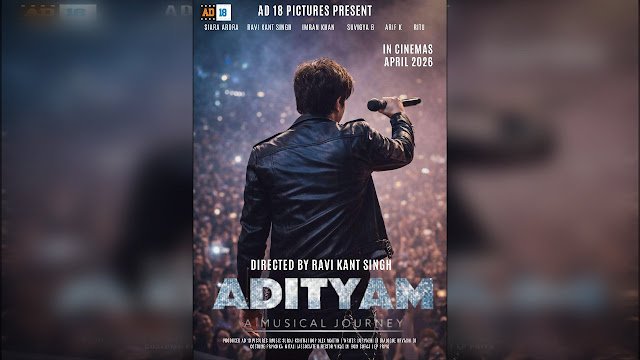
The pulsating lanes of Mumbai have long been a canvas for stories
of ambition, power, and survival.
Adityam dives deep into this electric
cityscape, presenting a gripping narrative of two brothers shaped by opposing
worlds—one ruled by fear, the other guided by dreams.

Directed by Ravi Kant Singh, Adityam is an emotional crime
drama that explores the fragile threads of family, loyalty, and destiny.

From Iconic Ad Campaigns to Cinematic Brilliance

The project is helmed by a seasoned director whose impressive body
of work includes television ad films for leading global brands such as Cadbury,
Coca-Cola, and Adidas, among many others. Known for crafting visually
compelling and emotionally resonant campaigns, the director brings a wealth of
advertising expertise to the table. Complementing this vision, Suraj and
Kshitij have infused the project with melodious and evocative music, adding
depth and soul to the overall creative experience.

A Story of Two Paths

At the heart of Adityam are two brothers whose lives take
drastically different directions. The elder brother, portrayed by Imran Khan,
is a feared gangster who lives by one belief: power is survival. In the
ruthless underbelly of the city, he commands respect and instills fear.

In stark contrast stands the younger brother, played by Ravi Kant
Singh, a struggling musician chasing dreams through melody and meaning. For
him, music is freedom—a way out of darkness and into hope.

When the elder brother demands that the younger abandon his
musical aspirations to join the criminal empire, refusal comes at a heavy cost.
Cast out from home, the younger brother must carve his own path in a city that
rarely forgives weakness.

Love, Loss, and a Turning Point

Alone but determined, the younger brother begins performing at
small shows, slowly finding his rhythm. Along the way, he meets a woman who
becomes both his anchor and his love, portrayed by Siara Arora. Through her
unwavering support, he begins to rebuild his life and rediscover hope.

But just as his world begins to stabilize, tragedy strikes—the
elder brother is gone.

Grief quickly transforms into rage. Drawn back into the shadows of
the underworld, the younger brother steps into the very empire he once
rejected. What follows is a gripping descent into violence, vengeance, and
moral conflict.

A Climax That Redefines Fate

As bullets replace ballads and power overshadows passion, a
shocking truth emerges in the film’s climax. The revelation forces the younger
brother to confront a haunting question: Will he become the very man he once
despised, or will he break the cycle and redefine his destiny?

Adityam promises intense performances
from its ensemble cast, including Arif, Subigya, and Ritu, adding depth and
dimension to this layered narrative.

Mark Your Calendars

The teaser for Adityam is set to release on 14th March,
building anticipation for what promises to be a powerful cinematic journey of
love, loss, revenge, and redemption.

Blending the raw energy of the underworld with the soul of music, Adityam
is poised to strike an emotional chord with audiences—reminding us that
sometimes, the hardest battles are not fought on the streets, but within.


Pune:
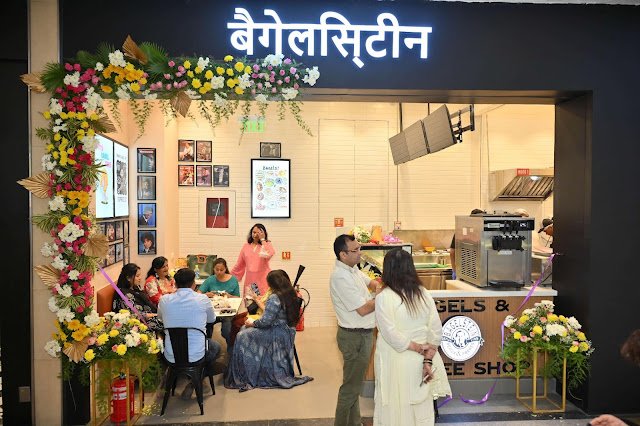
Bagelstein, France’s bagel pioneer founded in 2011, has strengthened its
presence in India with the opening of its 5th store at Phoenix Marketcity,
Viman nagar Pune. Marking another milestone in the brand’s India journey, the
outlet also stands out as Bagelstein’s pure vegetarian restaurant format in the
country, aligning with the evolving lifestyle preferences of Indian consumers.

With Pune emerging as one of India’s most
vibrant lifestyle and food destinations, the city continues to attract young
professionals, students, entrepreneurs, and global workforces who are
constantly exploring international cuisines and convenient gourmet dining
formats. Phoenix Marketcity, one of Pune’s most premium retail and
entertainment hubs, offers the ideal ecosystem of high footfall, aspirational
consumers, and experiential dining — making it a strategic location for
Bagelstein’s next phase of expansion.

The increasing popularity of bagels in India
reflects evolving consumer preferences, where quick-service formats meet quality,
freshness, and indulgence. Bagelstein’s menu caters to this shift with
oven-fresh handcrafted vegetarian bagels, premium fillings, stacked sandwiches,
flavourful spreads, artisanal coffees, refreshing beverages, and indulgent
desserts. True to its European roots, the brand blends authenticity with
creativity while delivering a casual yet premium café experience.

Commenting on the expansion, Gaurav Marya,
Founder and Chairman, Franchise India, said, “Global food brands today are
increasingly looking at franchising as the most efficient and scalable route to
enter and expand in fast-growing markets like India. The country’s strong
consumption story, young demographics, and appetite for international flavours
make it a compelling destination for global QSR and café brands. Bagelstein
consistent expansion reflects how structured franchising enables faster market
penetration while maintaining brand consistency and operational excellence.”

Sharing his perspective on the Pune growth
story, Sapna Poddar & Mohit Singhal, Area Developer, Bagelstein –  (Pune, Maharsahtra and Goa) the brand’s India
leadership added, “Pune has rapidly evolved into a high-energy market for
premium yet accessible dining. The audience here appreciates global tastes,
quality ingredients, and differentiated café formats. Introducing a pure
vegetarian Bagelstein experience allows us to stay culturally relevant while
maintaining the brand’s international character. Phoenix Marketcity provides us
the perfect platform to connect with a wide community of food lovers.”

With the opening of its fifth store in Pune,
Bagelstein continues to deepen its footprint in India’s fast-evolving food
service landscape. The brand’s steady expansion reflects rising consumer demand
for global café concepts and highlights Pune’s emergence as a key growth engine
for international food brands. As Bagelstein accelerates its journey across
metro markets, it remains focused on delivering distinctive flavours,
consistent quality, and a vibrant dining experience to India’s growing
community of urban food enthusiasts.


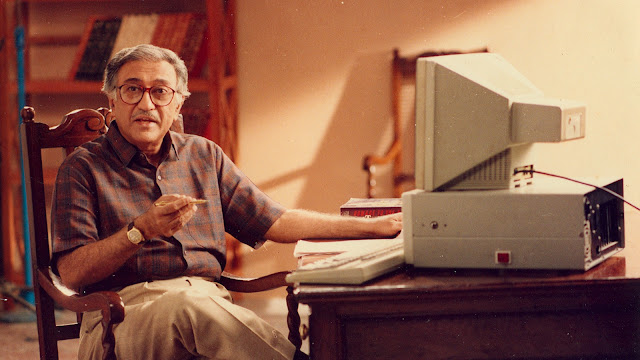
On the occasion of World Radio Day (13 February 2026), Mobius Films and Rajil Sayani proudly announce Behno Aur Bhaiyo a definitive, soulful and nostalgia-rich feature-length docu-biopic on the legendary radio icon, Ameen Sayani. The announcement comes days before his death anniversary on 20th February, marking a deeply emotional and historic tribute.

Directed by National Award-winning filmmaker Brahmanand S Singh and co-directed by Tanvi Jain, the film traces the extraordinary journey of a voice that united India for over five decades — week after week, generation after generation.

 A Tribute to the Voice That Shaped India’s Musical Memory

Behno Aur Bhaiyo will blend rare family archives, unseen photographs, handwritten scripts and exclusive audio recordings, along with in-depth conversations with some of India’s most celebrated musicians, actors, radio stalwarts and media personalities.

The film promises to be a deeply nostalgic, culturally significant and emotionally resonant tribute to the man whose warmth, tone and signature greeting became an inseparable part of millions of Indian homes.

Beyond the life of Ameen Sayani, the film will also capture the evolution of Indian broadcasting, the golden era of music programming and the cultural shifts that shaped India’s listening habits across generations.

The filmmakers are in conversation with and expect reflections from an illustrious line-up of personalities, including:

Amitabh Bachchan,

Asha Bhosle,

Javed Akhtar,

Jaya Bachchan,

Mahesh Bhatt,

Raju Hirani,

Ramesh Sippy,

Shatrughan Sinha,

Sunil Gavaskar,

Virender Sehwag,

Varun Dhawan

…along with several other eminent names from the worlds of cinema, music, media and broadcasting.

The film is a collaboration between Mobius Films and Rajil Sayani, ensuring exceptional access to personal archives and invaluable memorabilia that chronicle the life and legacy of Ameen Sayani.

Speaking on the announcement, directors Brahmanand S. Singh and Tanvi Jain said:

 “Ameen Sayani is a national memory. This film is a journey through memory, melody and magic. It is our love letter to the man whose voice united India week after week, year after year.

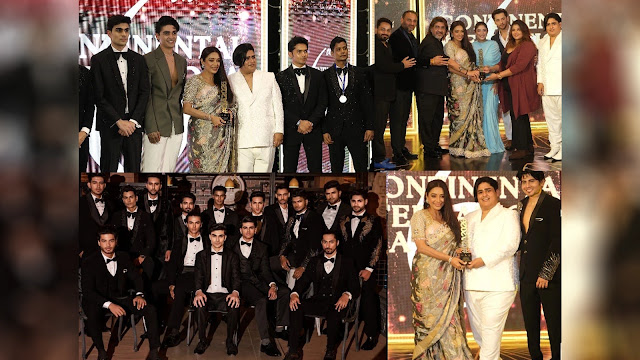
The 6th Continental International Awards, along with the 8th Iconic Mr. India 2026, curated by Aditya Khurana, unfolded as a grand celebration of excellence, creativity, and influence across Indian television, digital media, and the entertainment industry. The prestigious evening brought together industry veterans, celebrated performers, emerging talents, and influential media voices, further cementing the platform’s reputation as a benchmark of recognition and credibility.

The star-studded awards night honoured an illustrious lineup including Rajan Shahi, Ishika Shahi, Rupali Ganguly, Rohit Purohit, Samridhii Shukla, Adrija Roy, Shivam Khajuria, Romesh Kalra, Rishi Mandial, Kanwar Dhillon, Neha Harsora, Shivangi Joshi, Akanksha Puri, Rrahul Sudhir, Shivangi Verma, Entertainment Editor Rekha Khan, and Barkha Bisht, among several others.

Rajan Shahi emerged as one of the most celebrated winners of the evening, receiving Best Producer of Indian Television for his iconic shows Yeh Rishta Kya Kehlata Hai and Anupama. YRKKH was honoured as the Longest Running Television Show, while Anupama won Most Popular Television Show. Ishika Shahi was recognised as Most Promising Digital Creator, acknowledging her growing impact in the digital space.

Among the acting honours, Rupali Ganguly took home the award for Most Popular Actress of Indian Television, while Kanwar Dhillon was named Most Popular Actor of Indian Television. Shivam Khajuria and Adrija Roy won Best Actor and Best Actress of Indian Television respectively. Rising stars Rohit Purohit and Samridhii Shukla were honoured as Most Promising Actor and Most Promising Actress of Indian Television, while Shivangi Verma received Most Promising Actress – OTT for her performance in Yeh Hai Sanak.

The evening also featured several special accolades that added further distinction to the ceremony. Shagun Sharma won Best Actress – Critics’ Choice, Akanksha Puri was crowned Fitness & Style Icon, Tina Dutta received Best Breakthrough Performer (Female), and Rrahul Sudhir won Best Breakthrough Performer (Male). Annkit Bhatia and Barkha Bisht were honoured as Best Actor – Negative (Male & Female), while Neha Harsora was recognised as Versatile Actress of Indian Television. Celebrated journalist Rekha Khan received the award for Most Innovative Entertainment Editor, acknowledging her impactful contribution to entertainment journalism.

Adding glamour and gravitas to the evening, the guest list featured notable personalities such as Neelu Kohli, Shivani Gosain, Diandra Soares, Poonam Pandey, Arshi Khan, Shagun Sharma, Harsh Nagar, Sneha Jain, Parakh Madan, Rupesh Sonar, Chaitali Kohli, Kashyata Bhatia, Singer Parleen Gill with wife and Aditya Deshmukh.

The 8th Iconic Mr. India 2026 segment of the event celebrated excellence and individuality across categories. Moha Kiran was crowned Man of the World India 2026, Awaab Khan received the title of Man of the Year India 2026, and Nandan Pavaskar was honoured as Mister Universe India 2026. Sai Bhavadesh won Mister Culture World India 2026, Sanjib Singh was named Great Man of Universe India 2026, while Pushpendra Dewasi took home the title of Teen Universe India 2026.

With seamless execution and powerful recognition of talent across platforms, the event once again reinforced Aditya Khurana’s vision of celebrating excellence and shaping the future of entertainment awards in India.

New Delhi [India], February 10 : As India’s fashion market evolves toward refined minimalism and purpose-driven design, premium women’s western wear label DELAN has introduced a new brand narrative titled “Suns and Shadows,” reflecting the growing appetite for understated elegance, versatility, and modern sophistication among urban consumers.

The title “Suns and Shadows” feels expansive and cinematic, hinting at contrast, depth, and movement. It evokes a collection shaped by many moments bright, unapologetic highs and quieter, introspective lows. The name captures duality: light versus dark, softness versus strength, stillness versus drama. It works beautifully for pieces that play with multiple colours, varied textures, and bold statements, allowing each garment to exist in its own mood while remaining part of a cohesive story.

The concept marks a strategic creative shift for DELAN, offering a more cinematic and expressive visual language while remaining anchored in the brand’s core philosophy of quiet luxury fashion that prioritises craftsmanship, comfort, and timeless appeal over fast-moving trends. “Suns and Shadows” feels fluid rather than rigid, like a journey through changing light across time, immersive, poetic, and editorial in its tone.

The collection explores contrast as a storytelling device light and depth, softness and structure mirroring the everyday realities of contemporary women navigating professional and personal spaces. The shoot demonstrates how premium western wear can feel elevated through refined silhouettes, premium fabrics, and subtle detailing, rather than overt embellishment.

Founded by Vikas Kumar Sardana, Founder and Creative Director, DELAN draws on more than two decades of experience across apparel manufacturing and retail. Beginning his career in surplus and retail apparel in 2008, Sardana gained deep operational insight into fabric quality, consumer behaviour, fit engineering, and durability insights that later shaped DELAN’s design-first approach.

Launched in 2022, the brand was conceived to address a visible gap in India’s premium western wear space: clothing that blends elegance with real-world wearability. From breathable fabrics and structured tailoring to versatile colour palettes, DELAN positions itself for women seeking wardrobe longevity rather than seasonal novelty.

‘Suns and Shadows’ represents the rhythm of everyday life strong moments, softer transitions, and everything in between,” Sardana notes. “Our designs are created for real environments workdays, meetings, social gatherings not just curated photoshoots. This campaign brings that reality into a modern, visual narrative.”

The brand’s strategy aligns with a broader shift in India’s premium apparel sector. With consumers increasingly quality-conscious, investment dressing focused on comfort, durability, and multi-use styling is gaining momentum over trend-driven fashion cycles. Working professionals, in particular, are prioritising adaptable western wear that seamlessly transitions from daytime formal to evening casual.

Industry observers note that minimalist aesthetics, premium fabric experiences, and functional design have emerged as decisive purchase drivers, signalling a maturing fashion market that values craftsmanship alongside visual appeal.

Through “Suns and Shadows,” DELAN reinforces its product-centric positioning, highlighting precision fit, thoughtful construction, and fabric excellence while introducing a contemporary creative identity that reflects confidence, depth, and modern femininity.

As India’s premium western wear segment continues to expand, brands rooted in quality-led design and lifestyle relevance are increasingly shaping the next phase of fashion consumption. DELAN’s latest narrative signals a commitment to building enduring wardrobes, not fleeting trends, for the evolving Indian woman.


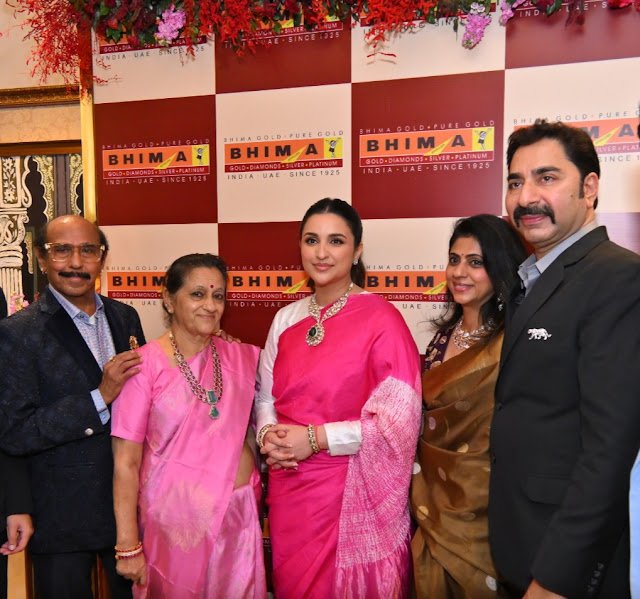
Noida, February 2026 : Bollywood superstar Parineeti Chopra graced the
launch of Bhima Jewellery’s new showroom in Noida, marking the brand’s growing
presence across India. The event welcomed both Bhima’s customers and guests to
celebrate the opening of a new venue of cinematic glamour combined with a
century of craftsmanship and reliability.

Parineeti’s presence adds excitement and star power
to Bhima’s launch as they complete their 100-year anniversary of providing
high-quality jewellery through their commitment to purity, honesty, fair
business practices, and timelessness. The launch reaffirms Bhima jewellery’s
rich heritage and connection to today’s consumers while remaining true to their
commitment to providing high-quality jewellery and services.

The showroom is located at P17, Sector 18, Noida. It
has an extensive selection of 22-carat gold jewellery; all products are 100%
certified by the Bureau of Indian Standards (BIS); Bhima offers transparent
pricing, and the state-of-the-art retail experience provides a unique opportunity
for buyers to appreciate the craftsmanship and history of Bhima jewellery in
combination with today’s needs.

Speaking at the launch, Parineeti Chopra said, “Jewellery is
deeply connected to personal milestones and memories, and Bhima Jewellery
understands that beautifully. Their focus on trust, purity, and thoughtful
design is what makes the brand truly special, even today.”

Dr. B. Govindan, Chairman, Bhima Jewellery, shared, “Opening
the Noida showroom is not just about adding a new store, but about becoming a
part of the city and its people. As we complete 100 years of our journey, our
focus remains on offering jewellery customers can trust, with honest pricing,
quality craftsmanship, and a comfortable shopping experience.”

Mr. Sudhir Kapoor, Managing Partner, Bhima Jewellery, added, “As
Bhima completes 100 years, our focus remains on building a future-ready retail
business while staying true to the values that have earned customer trust for
generations. The Noida launch is a strategic step in our pan-India expansion,
allowing us to connect with a growing base of discerning consumers.”

The launch event saw guests enjoying personalised walkthroughs,
curated jewellery displays, media interactions, and celebratory moments with
Parineeti Chopra and the Bhima Jewellery leadership team, marking the brand’s
entry into Noida in a memorable way.

As Bhima Jewellery enters its centenary phase, the
brand continues to focus on design innovation, omnichannel retail, responsible
expansion, and geographic growth, while maintaining the rigorous quality and
purity standards that have defined it for generations.

About Bhima Jewellery
Founded in 1925, Bhima Jewellery is one of
India’s most trusted jewellery brands, known for its uncompromising standards
of purity, ethical business practices, and excellence in craftsmanship. Today,
the brand operates a strong retail network across India and the UAE, offering
gold, diamond, platinum, and silver jewellery across bridal, festive, everyday,
and contemporary collections, seamlessly blending heritage with modern retail
innovation.

For more information, contact:

Heeta Raina | Kannika Shembekar

9682170988 | 8446650899

heeta@moshimoshi.in | kannika@moshimoshi.in

Website: https://www.thebhimajewellery.com/

Mumbai: Bollywood star Akshay Kumar is set to return to cinemas with a bang as his much-anticipated horror-comedy Bhoot Bangla has officially advanced its theatrical release date. Originally scheduled to hit screens on May 15, 2026, the film will now arrive a month earlier on April 10, 2026, much to the delight of fans and trade analysts alike.

The decision to prepone the release is being viewed as a well-calculated strategic move by the makers to secure a stronger theatrical window and capitalize on heightened audience interest. With fewer competing releases expected during the period, Bhoot Bangla is poised to enjoy better visibility and box-office traction upon its release.

Directed by veteran filmmaker Priyadarshan, the film marks another exciting collaboration that promises to bring Akshay Kumar back in his much-loved entertainer avatar. Known for his impeccable comic timing and mass appeal, the actor is expected to strike a fine balance between humor, suspense, and mystery—elements that define the horror-comedy genre.

Adding considerable strength to the project is its impressive ensemble cast, featuring Wamiqa Gabbi, Paresh Rawal, Tabu, and Rajpal Yadav. The presence of seasoned performers alongside emerging talent has further heightened expectations, with audiences anticipating a rich blend of performance-driven comedy and engaging storytelling.

Bhoot Bangla is presented by Balaji Motion Pictures, a division of Balaji Telefilms Ltd., in association with Cape of Good Films. The collaboration between these established production banners signals a project mounted on a strong creative and commercial foundation.

Industry insiders believe the film’s genre, combined with Akshay Kumar’s star power and Priyadarshan’s directorial expertise, positions Bhoot Bangla as a potential crowd-puller across urban and mass circuits. Horror-comedies have historically performed well at the Indian box office, especially when backed by recognizable faces and engaging narratives.

As anticipation builds, Bhoot Bangla is shaping up to deliver a perfect mix of laughter and chills, offering audiences a wholesome theatrical experience. With its new release date locked in, all eyes are now on April 10, 2026, when the film is expected to create a significant buzz across cinema halls nationwide.